

Hibiscus Educational Training Centre · Ghana
Train for a career that cares.
Montessori teacher training and professional caregiver programmes with internationally recognised certification.


Welcome to HETC
A better future in Montessori education and professional care
HETC as a Care-giver Training Institute can help you secure a better future for yourself and your family in the high demand medical field.
Our mission is to empower individuals with adequate knowledge, skills, and values needed to offer the highest standard of professional care both within and outside Ghana, thereby making them the best choice care providers.
More about usOur courses
Programmes built for careers in education and care
Montessori Teacher Training
Assistants to Infancy (0–3 years)
Primary / Children’s House (3–6 years)
Elementary (6–12 years)
Adolescent (12–18 years)
Professional Diploma Programs
Medical Social Work (PDMSW)
Mental Healthcare (PDMHC)
Public Healthcare (PDPHC)
Caregiving (PDCG)
Career Pathway Programs
Certified Nursing Assistant (CNA)
Certified Medication Aide (CMA)
Licensed Practical Nurse (LPN) progression
Registered Nurse (RN) advanced pathway
Specialized Short Courses
Dignity in Care, Duty of Care, Falls Awareness, Food Hygiene, Person-Centered Care, Pressure Area Care and more.
Caregiver & Healthcare Training
Care Certificate, Basic Life Support, Dementia Awareness, Infection Control, Medication Practice, End-of-Life Care and more.
Our mission
Equity, excellence and success for all
High-quality educational services that promote the pedagogical principles of Dr. Maria Montessori as an Association Montessori International (AMI) affiliate — and to raise the standards in care-giving and the awareness of the critical role that caregivers play in society.
Our vision
An international credential for the benefit of humanity
To be a leader among Montessori training centers and primary partner for the global community, creating equitable, accessible, sustainable and quality Montessori training, professional development, parent education, and community outreach.

Dr. Maria Montessori (1870 – 1952)
Maria Montessori was “ahead of her time”
Maria Montessori is often referred to as “ahead of her time”. Born in Italy in 1870, Maria Montessori moved to Rome with her parents in 1875 at the age of five. Although her father Alessandro embraced traditional views of female education, it was the more liberal approach of her mother, Renilde Montessori that encouraged Maria Montessori to explore her natural inclination to learn, regardless of the social restrictions placed on women in the male-dominated society of the day. In so doing, Renilde played an active role in her daughter’s upbringing, and indeed, the whole philosophy behind what is now known as the “Montessori Method.”
Studies in math, physics, natural sciences, biology and medicine led Maria Montessori to apply to the College of Medicine at the University of Rome, and she became the first female certified physician in Italy in 1896, graduating at the top of her class. In addition to her duties as a doctor, Maria Montessori conducted research work in psychiatric medicine and continued her education in philosophy, psychology and education. She was appointed professor of anthropology at the University of Rome in 1904.
Her story
More on Doctor Maria Montessori
Throughout, her interest in the development of children grew – first from her experience with disabled children and the deplorable state of their care at the time, then further with mentally-challenged children in her care. As she learned from the work of others already accomplished in the area of early childhood education, her own theories evolved, embracing elements, ideas and methods of all disciplines she had studied.
In 1906, at the age of 36, Maria Montessori founded the first Casa dei Bambini, or “Children’s House” for children of the industrial revolution’s working-class in one of the city’s worst slum districts. With some 60 children in her care, Maria Montessori began their education by instructing the older children on how to help out with everyday chores. Sense materials that she had developed previously were introduced, and to her surprise, Montessori discovered how naturally young children adapted and enjoyed learning everyday tasks. The structure of work and constructive activity gave the children a sense of self-worth that they had never before experienced.
One of Dr. Maria Montessori’s first major hurdles to improve the lives of these children was accomplished by encouraging parents to recognize that their children were special and of great value. From this reverence for the individual beauty and potential grew the Montessori Method. Critical periods of early childhood development were identified through her observations, and the methodology evolved to address these periods with age-appropriate learning tools and activities.
Further development of the methodology embraced what Montessori described as the “cosmic education” – where children would be given the environment and guidance to become the peacemakers of the future, existing in harmony with all living beings in a sustainable world.
From this time to her death in 1952, Maria Montessori continued her work, which became widely recognized and embraced throughout the United States, Europe, and India. She conducted and founded training courses on these continents, established a research institute in Spain, and developed Montessori Training Centers in the Netherlands and London. Maria Montessori was a three-time nominee for the Nobel Peace Prize – in 1949, 1950, and 1951.
Becoming a Montessori teacher
With the steady growth in the number and enrollment of Montessori schools around the world, certified Montessori teachers are in great demand.
The Montessori Method of teaching aims for the fullest possible development of the whole child, ultimately preparing him for life’s many rich experiences.
Become a Montessori teacherOur courses
Some of our courses
Get certified as a professional caregiver with world-class professional training courses and an internationally recognized certificate.
Care certificate
Basic Life certificate
Catheter care
Behaviors that Challenge
Communication
Dementia Awareness
Dignity in Care
Duty of Care
End-of-Life Care
Falls Awareness
Food Hygiene
Health and Safety
Safeguarding and Protection of Adults
Learning Disability
Managing Continence
Medication Practice
Mental Health
Moving and Handling
Nutrition and Hydration
Oral Care
Person-Centered Care
Personal Care
Pressure Area Care
Infection Control
Why choose HETC
Certificates with international standing
Accredited & recognised
Our certificates are accredited and recognised by international bodies, and all courses are endorsed, approved and validated.
Notarized overseas
Certificates are notarized from overseas and carry the emblems of HETC and international organizations.
Certificate in 30–90 days
You receive your certificate within 30–90 days after finishing the course.
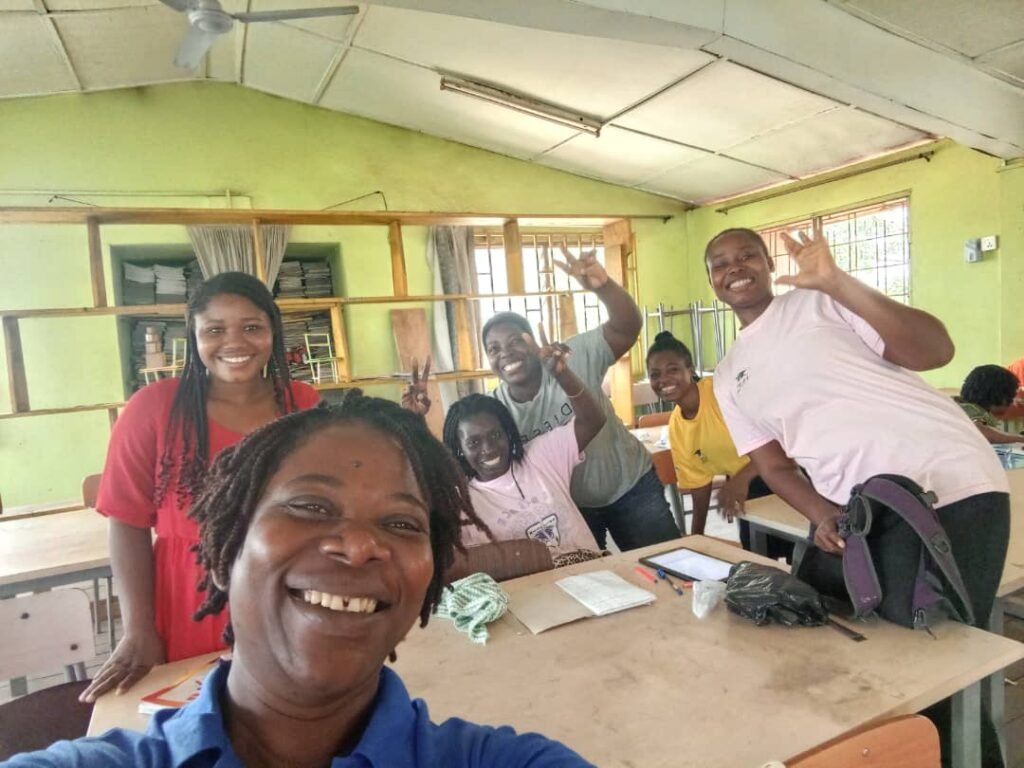
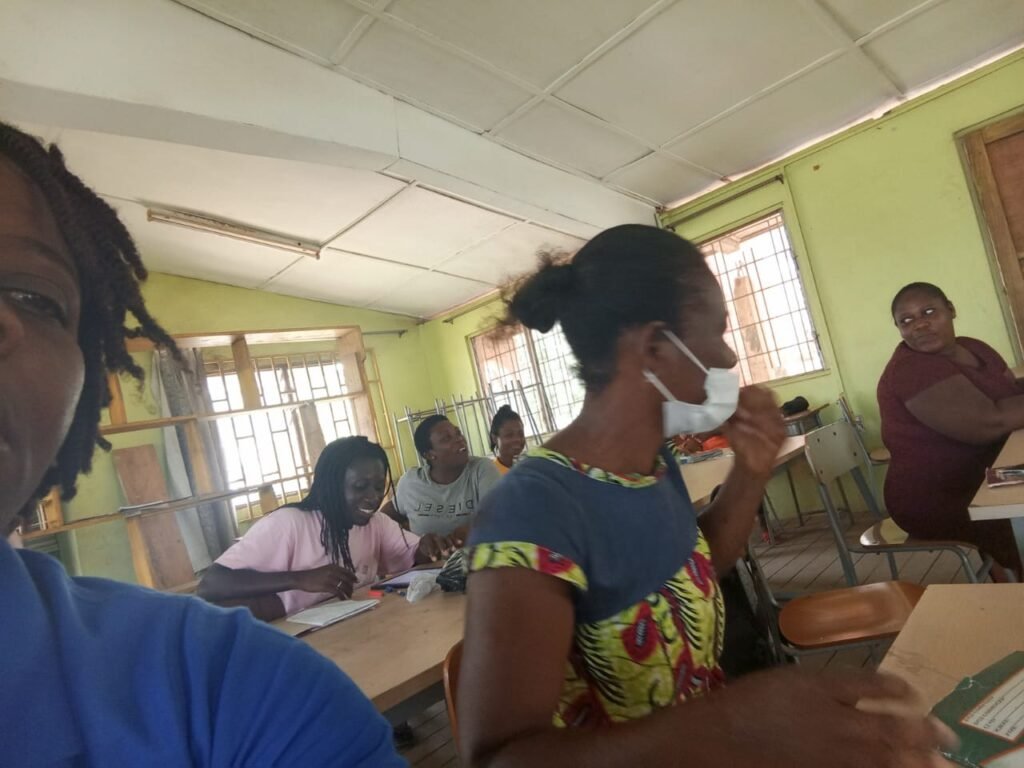
Real classroom training
No “online” or “distance course” is mentioned on your certificate, because there are none.



Take the first step
Join HETC today and gain the skills, knowledge, and certification you need to succeed in a growing global industry.
Get in touch
Speak to our admissions office
Call us
+233 20 829 2525Visit us
Tema Campus: 1st Floor Meridian Plaza, Adjacent MTN Office, Community One, Tema, Ghana.
Accra Campus: Madina – Queen of Peace Catholic School.